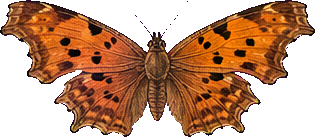
Horae
A clock typeset from living things. Butterflies, songbirds, leaves and flowers settle along the strokes of the hour — on a screen made to stay lit all night.
Named for the Horae, the Greek goddesses who kept the hours and turned the seasons.
Horologium Florae · Linnaeus, 1751
00 · The plates
Time, mounted like a specimen drawer
Nothing below is a screenshot. Every face is running the app’s own rendering code, live in your browser, showing your clock — the digits are not a font, but individual specimens packed along the strokes of a real typeface, sized to the local thickness of each stroke.
Plate I
The butterfly face
Lepidoptera · twenty-four specimens
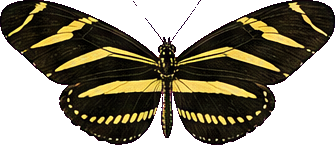
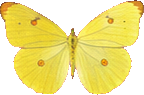
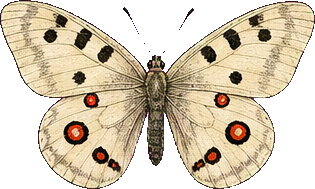
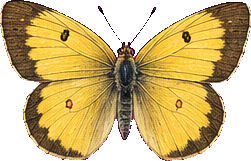
Two dozen pinned butterflies settle along the shape of each digit — large wings where the stroke runs thick, small ones where it thins, packed until the numeral reads. The colon is a pair of them, mid-wingbeat.
Plate II
The aviary
Passeriformes · forty-eight specimens
Songbirds have a head-to-tail axis, so they are set almost upright — tilt them like butterflies and the digit reads as a flock that fell over. Bigger specimens, tighter rotation, same typesetting.
Plate III
The pebbles
Lithic · forty-three specimens
Solid masses rather than winged things: they pack far denser and rotate barely at all, which turns the same numeral into something closer to a mosaic than a drawer of specimens.
Plate IV
Horologium Florae
After Carl Linnaeus, 1751
In 1751 Linnaeus proposed a clock made only of plants — flowers that open and close on schedule. Horae restores it: twelve blooms ring the dial in their waking order, twenty-four Latin binomials inscribed around them, a German motto through the middle ring, a sunflower at the heart, and tapered branch hands keeping real time. The bloom of the current hour stands beside the dial.
Plate V
The fallen leaves
Foliage · one hundred and fifty-four specimens
The largest library of the five, and the only one that never quite settles: every leaf sways on its own slow phase, so the hour breathes even while the time stands still.
00b · On the nightstand
Made to be left running
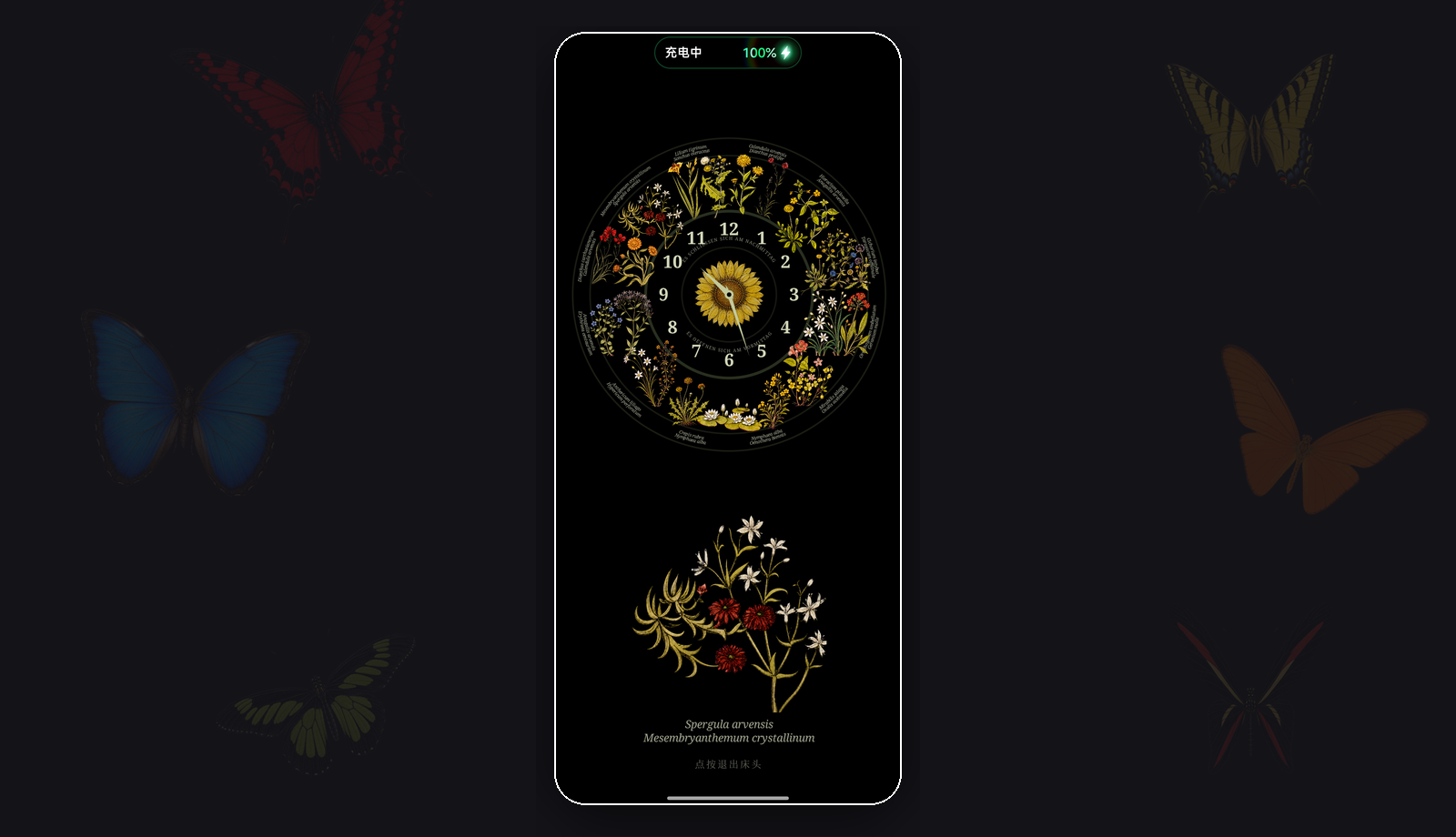
Plate VI
Bedside mode
Enters on charge, dims for the night
Plug in the charger and the clock takes the whole screen. After a while it fades down to a nightlight glow on true black — gentle on your eyes, your battery and your OLED. A tap brings it back.
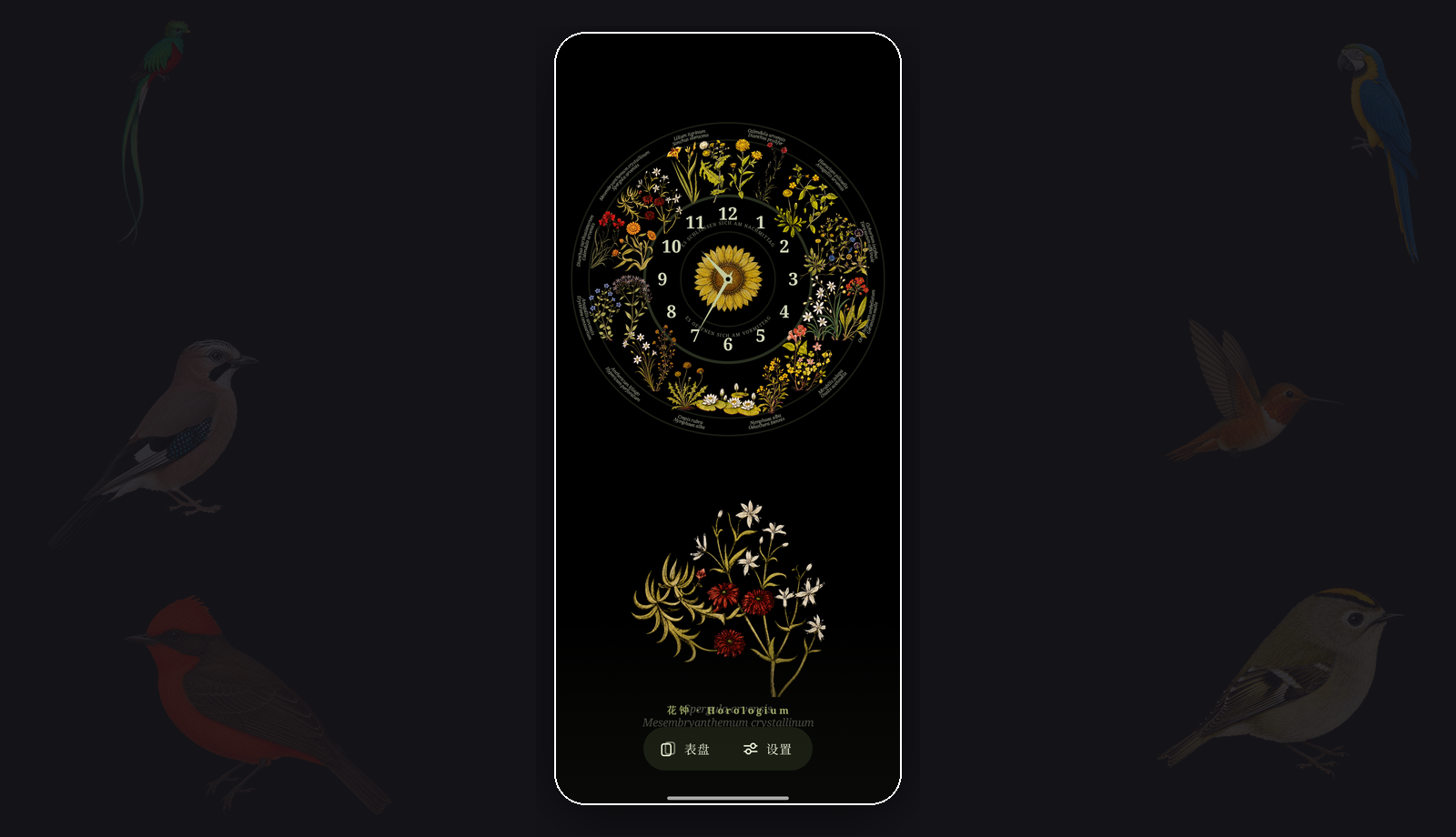
Plate VII
One screen, nothing else
No top bar, no drawer, no clutter
The home screen is only the clock. A single tap summons a small toolbar for faces and settings; a few seconds later it bows out and leaves the specimens alone.
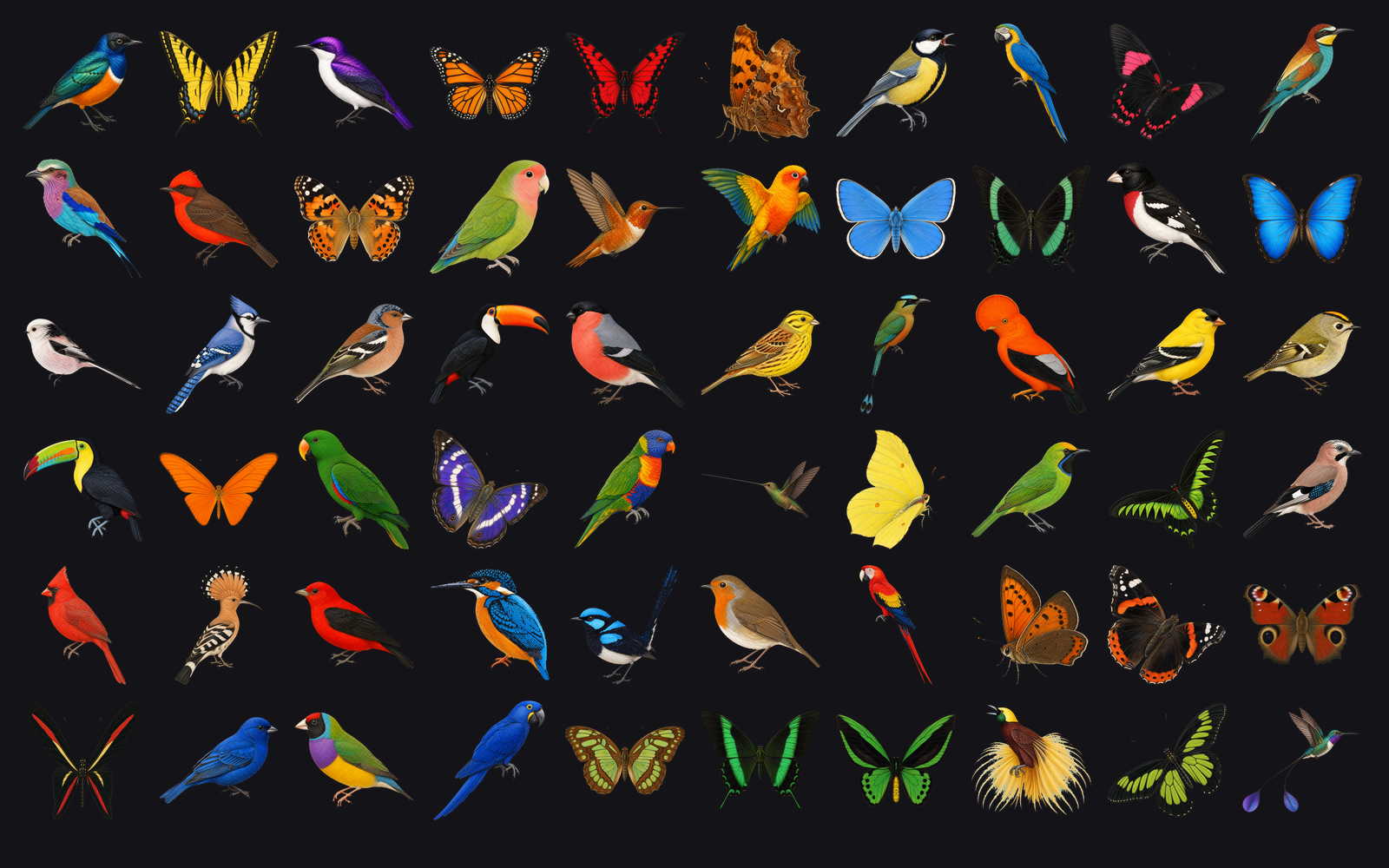
Plate VIII
The specimen cabinet
Every creature drawn one by one
Each specimen is an individually drawn, high-resolution illustration — cut from its background, catalogued, and sized for your screen. Sharpness comes from the original plate, not from scaling up.
00c · Inspiration
Inspired by Linnaeus’s flower clock
In 1751 Carl Linnaeus described the Horologium Florae: a garden bed planted so that the hour could be read from which flowers stood open. Horae grew out of that idea — a clock whose numerals are grown rather than drawn, and whose fourth face is the flower dial itself, twelve blooms around the rim with twenty-four Latin binomials inscribed between them.
The flower clock, species by species01 · Features
Made to be left on
Specimen typesettingdigits packed along real glyph outlines
Each numeral is rasterised from a true typeface, its stroke thickness measured point by point. Specimens are then packed in from large to small — big ones where strokes run thick, small ones where they thin, with barely any overlap. It reads as a number and looks like a drawer of specimens.
5 watch facesThe butterfly face · The aviary · The pebbles · Horologium Florae · The fallen leaves
Nothing below is a screenshot. Every face is running the app’s own rendering code, live in your browser, showing your clock — the digits are not a font, but individual specimens packed along the strokes of a real typeface, sized to the local thickness of each stroke.
Bedside modecharge in, lights down
Plugging in the charger switches to a full-screen clock automatically. Left still for a while, it dims to a nightlight level and lowers the backlight; a touch wakes it. It can sit by your pillow all night without glaring or draining.
Burn-in safetrue black, slow drift
At night the background is pure black, so OLED pixels simply turn off. The whole image also drifts along a very slow orbit — far too slow to notice, just enough to keep any pixel from staying lit in one place.
System screensaverAndroid Daydream
Horae registers as a native Android screensaver: pick it in system settings and it lights up whenever the phone charges or docks. On systems without a screensaver menu, bedside-on-charge gives the same result.
02 · Privacy
Nothing to collect
Your preferences stay on your device. The full policy — all of it fits on one short page — is at horae · privacy.
03 · Get it
App Store · Google Play
Horae
A clock typeset from living things. Butterflies, songbirds, leaves and flowers settle along the strokes of the hour — on a screen made to stay lit all night.
Android 8.0+ · iOS 17.0+
04 · FAQ
You will probably ask
- Will an all-night clock burn in my screen?
- Three layers of protection: at night the background is pure black so pixels switch off; after a period of stillness the whole image dims to a nightlight level; and the picture drifts along a very slow orbit so no pixel stays lit in one spot.
- Where do the specimens come from?
- They are drawn one by one as natural-history illustrations, then individually cut out, cropped and downsampled into the library — two dozen butterflies, four dozen songbirds, over a hundred leaves and flowers each, plus twelve hour-flower plates for the Linnaeus dial.
- Is the time actually readable?
- Yes — it follows system time, and placement is constrained for legibility: postures stay near upright, overlap is limited, and thin strokes automatically take smaller specimens, so the four digits always read. Density and size are adjustable in settings.
- Why “Horae”?
- In Greek myth the Horae are the goddesses of the hours and the turning seasons — timekeepers who worked in flowers and weather rather than gears. A clock whose digits grow out of botanical plates could hardly be named anything else.